Skip to content


The Real Cost of Pirated PDF Sewing Patterns
Share
What customers should know, and what designers can do when their work is stolen
Last updated: July 2026
Digital sewing patterns make creativity wonderfully accessible. You can purchase a pattern from a designer on the other side of the world, download it within minutes and begin choosing fabrics before your cup of tea goes cold.
Unfortunately, that convenience has also made it very easy for sewing patterns to be stolen, shared and sold without the designer's permission.
I have discovered my own Craftapalooza Designs patterns being sold by businesses that did not create them, license them or have permission to distribute them.
I have submitted copyright and DMCA-style takedown notices relating to unauthorised listings of my work on the following businesses and platforms:
- Printerval
- Chello Sewing
- LaRivee Sewing (their Meta Ads account was disabled)
I am not linking to these businesses because I do not want to send them traffic, improve their search rankings or make it easier for anyone to purchase stolen files.
This post is not about blaming customers who have been genuinely misled. Some of these websites are designed to look like legitimate online stores. Their listings may use the original designer's photographs, descriptions, branding and even customer reviews.
A buyer may have no obvious reason to suspect that the person selling the pattern has nothing to do with the person who created it.
That is exactly why customer awareness matters.
For customers, the risk is not simply that the pattern has been sold without the designer’s permission. You may receive an incomplete, altered or outdated file, have no access to genuine updates or support, struggle to obtain a refund, or receive nothing at all and these businesses now have your name, personal and payment details on record.
A PDF is a product, not “just a file”
When you purchase a PDF sewing or quilt pattern, you are not paying for the few seconds it takes to download it.
You are paying for the work required to create it.
Before a Craftapalooza Designs pattern reaches my store, I have usually:
- designed, created, thought about (a lot!) developed and refined the original idea
- calculated measurements and tested construction methods
- sewn multiple samples
- changed the design when something does not work as well as it should
- prepared templates, diagrams and illustrations
- written detailed instructions
- photographed the project and construction process
- arranged pattern testing and worked through tester feedback
- edited and proofread the pattern
- formatted the final PDF
- created product photographs, videos and tutorials
- written the product listing, emails and supporting information
- answered customer questions after release
- updated the pattern when further clarification is needed
A small finished project does not necessarily mean a small amount of design work.
Some of the simplest-looking patterns require the most thought. Every measurement, diagram, template, photograph and carefully worded instruction is there because somebody spent time making decisions, testing possibilities and trying to prevent the customer from having to unpick the same tiny seam six times.
The downloadable PDF is the final container.
The product is the knowledge, design work and experience inside it.
Why buying from a pirate website causes real damage
When an unauthorised business sells a stolen pattern, the original designer receives nothing from that sale.
The seller has not paid for the design, pattern testing, photography, editing, software, website costs, customer service or years of experience behind the pattern.
They can sell it cheaply because somebody else has already done all the work.
That affects a small creative business in several ways.
It takes income directly from the designer
Independent pattern businesses rely on pattern sales to pay both business expenses and ordinary living costs.
One lost sale may appear insignificant, but stolen patterns can be offered across multiple websites, marketplaces and social media advertisements.
The damage multiplies quietly.
It damages the value of the original work
A pattern may suddenly appear online at a fraction of its legitimate price, sometimes bundled with dozens or hundreds of other stolen designs.
Customers can understandably wonder why the original designer charges more.
The answer is that the designer paid the actual cost of creating, testing, presenting and supporting the product.
The pirate seller did not.
It creates customer-service problems for the designer
People who purchase an unauthorised copy may receive:
- an incomplete pattern
- an outdated version
- blurry or altered pages
- missing templates
- a different file from the one advertised
- no download at all
- no meaningful customer support
They may then contact the original designer for help.
I never want to see a maker disappointed or unable to complete a project. However, a small designer cannot provide free replacement files, pattern updates or ongoing support for something purchased from an unrelated business.
It consumes time that should be spent creating
Finding an infringement is only the beginning.
The designer may then have to:
- collect and preserve evidence
- identify the website platform
- identify hosting, domain, payment and advertising services
- complete multiple reporting forms
- prepare formal declarations
- make a test purchase
- attempt to download the file
- follow up with platforms
- monitor whether the listing returns
- report advertisements and search results separately
That can swallow hours or days.
Those are hours not spent designing, sewing, filming tutorials, helping legitimate customers or developing the next pattern.
The designer section later in this post shows what is actually involved. I'm sure this will evolve with time, a publish month and year is at the top of this document and it will be updated when time permits! You can always email me with any information updates.
Even if you are not a designer, I encourage you to look through it. A takedown is rarely one quick email followed by a cheerful cup of tea.
It may expose customers to additional risks
A business selling material it does not have permission to distribute has already demonstrated that it is willing to ignore somebody else's rights.
That should prompt customers to think carefully about where they enter payment details and personal information.
The file may not be what was advertised. The download may never arrive. The website may disappear. The customer may struggle to obtain a refund, and there may be nobody available to provide pattern support or updated files.
A cheap pattern can become a rather expensive little mystery parcel.
“But I only shared it with a friend”
Most customers would never knowingly purchase from a pattern pirate.
PDF sharing can feel less serious because no money changes hands.
However, emailing a paid PDF to a friend, uploading it to a group, placing it in a shared online folder or photocopying it for a class can still distribute the designer's work without permission.
When you purchase a standard PDF pattern from me or most other independent designers, you are generally purchasing a licence for your own personal use.
You are not purchasing the copyright or the right to reproduce and distribute the file.
There are plenty of legitimate ways to share the sewing joy:
- send your friend the designer's official shop link
- buy the pattern as a gift
- tell them when the designer is holding a sale
- ask about group, classroom or guild licensing
- share photographs of your finished project
- recommend the pattern in your sewing group
You can share your enthusiasm without sharing the file.
How customers can check whether a pattern listing is legitimate
Before purchasing, take a moment to look at who is actually selling the pattern.
Find the named designer
Search for the pattern title and the designer's name.
Look for the designer's official website, recognised marketplace shop or social media account.
A legitimate listing should clearly identify who designed the pattern, unless the retailer has an authorised licensing or distribution arrangement.
Compare the listing
Be cautious when a website:
- offers a recognisable designer's pattern without naming them
- uses the designer's photographs or product description without explanation
- sells patterns from many unrelated designers under one shop identity
- offers enormous numbers of patterns at implausibly low prices
- bundles hundreds or thousands of branded patterns together or even other random products not related to quilting and sewing
- has inconsistent branding, descriptions or image quality
- provides little meaningful information about the business
- makes it difficult to locate contact details, policies or ownership information
- claims that an obviously recognisable pattern is its own design
A discount by itself does not prove that a listing is unauthorised.
Designers run sales, work with affiliates, license their work, sell through authorised stockists and participate in legitimate bundles.
Look at the whole picture.
Ask the designer
When you are unsure, email the designer with the listing URL or a screenshot.
Please do not post the live link publicly, tag the seller or encourage other people to visit the listing.
That can send the page more traffic and may alert the seller before the designer has preserved the evidence.
An email is much more useful and very much appreciated. Social media inboxes can be unruly little beasts, and important messages are easily buried.
What should you do if you accidentally purchase a pirated pattern?
First, do not blame yourself.
These websites may use original photographs, professional-looking listings and familiar payment methods to appear legitimate.
Then:
- Save your order confirmation, receipt and all emails.
- Take screenshots of the product listing and website.
- Record the exact website address.
- Contact the original designer privately.
- Explain what you purchased, when you purchased it and what you received.
- Ask your payment provider about its dispute process if the product was misrepresented, missing or unauthorised.
- Do not forward the file to anyone else.
- Preserve only the evidence that is reasonably required.
- Delete the unauthorised file once it is no longer required for evidence.
The original designer may ask for a copy of the file or screenshots as evidence.
Do not post the file publicly or upload it to a shared folder unless the copyright owner specifically requests a secure method of delivery.
How buying directly supports independent designers
Buying from the original designer does more than place a PDF in your downloads folder.
It helps pay for:
- future patterns
- pattern testing
- clear diagrams and photography
- video tutorials
- customer support
- software and website costs
- free resources and sew-alongs
- the continued existence of a small creative business
It also gives you the correct pattern, legitimate access to updates and a direct connection to the person who understands how the project was designed.
That is a much nicer sewing circle to be part of.
A final note for customers
Most independent designers are not giant companies with legal departments waiting behind a velvet curtain.
We are the person who designed the pattern, made the sample, photographed it, uploaded the file, answered your email and celebrated when you tagged us in your finished project.
Buying directly from designers and their authorised stockists keeps that small creative ecosystem alive.
When you find a suspicious listing, send it privately to the designer.
Email is usually the most helpful option because social media inboxes can be difficult to monitor and organise.
When you love a pattern, share the legitimate shop link rather than the PDF.
And when you purchase directly from an independent designer, know that your order genuinely helps fund the next idea, the next sample and the next small piece of sewing joy.
For designers: You have found your stolen pattern online. What now?
- Step 1: Do not contact the seller immediately
- Step 2: Preserve the evidence
- Step 3: Record evidence of your ownership
- Step 4: Decide whether you need to make a test purchase
- If the download link does not work
- Step 5: Identify the platform and relevant service providers
- Step 6: Submit the appropriate copyright report
- Step 7: Report the payment account where appropriate
- Step 8: Report search results, social media posts and advertisements
- Copyright reporting resources
- Domain information
- Australian copyright resources
- Step 9: Keep a takedown log
- Step 10: Follow up and monitor
- Step 11: Decide how much more energy to spend
- Step 12: Talk about it carefully
- Finally, look after yourself
Finding your work being sold without permission can feel like being punched in the stomach by your own sewing machine.
There may be anger, panic, disbelief and an urgent feeling that you must make the entire internet behave before lunchtime.
My blood pressure certainly does not thank me when I find one of my patterns being pirated.
I genuinely commiserate.
It is emotionally exhausting and extraordinarily time-consuming. You may need to step away for a moment before responding so that your first communication is clear, factual and useful.
I cannot investigate the infringement, prepare reports or manage the takedown process for you.
Every website, host, marketplace and payment provider has its own system, and the copyright owner will generally need to make the formal declarations personally.
Some of the reporting links and procedures below may also change after this post is published.
What I can do is share the process I use.
This is general practical information based on my own experience. It is not legal advice. Copyright rules and platform procedures vary between countries and services.
Seek professional legal advice when an infringement is substantial, complicated, disputed or continuing.
Step 1: Do not contact the seller immediately
Your first instinct may be to send an angry message or comment publicly.
Pause.
Once alerted, the seller may remove the listing, alter the URL, hide account details or move the file before you have collected evidence.
I have also encountered a site where I could not see the stolen product from Australia, while a colleague in the United States could still access it. A VPN or assistance from a trusted person in another country may help confirm whether a listing is being hidden geographically.
Document first.
Contact and report second.
Step 2: Preserve the evidence
Create a folder for the infringement and save:
- the full listing URL
- the website homepage URL
- screenshots showing the complete listing
- the product title and description
- the price and currency
- the seller or business name
- your original photographs being used
- copied product descriptions
- visible sales figures, favourites, views or customer reviews
- the date and time you discovered it
- search results or advertisements that led to it
- social media posts promoting it
- checkout and payment information
- the website's contact, policy, terms and About pages
Take wide screenshots showing the context of the whole page and close screenshots showing the specific stolen material.
A screen recording can also help establish how pages connect, particularly when a listing is difficult to navigate, changes after refreshing or appears only after several clicks.
Save everything before reporting it.
Consider reporting paid advertising early (BEFORE contacting the pirate)
Once you have preserved the evidence, check whether the seller is actively advertising your stolen pattern through Meta, Google or another advertising platform.
It may be worth reporting the paid advertisements before beginning the slower process of identifying the website host or waiting for the business itself to respond.
Some businesses selling stolen patterns are difficult to trace. Their website platform or hosting provider may not be obvious, and they may delay responding to copyright complaints. In my experience, Printerval was not straightforward to identify or report through, and responses were not immediate.
Paid advertisements can continue sending new customers to the stolen listing while you are trying to work out who hosts the website and where to lodge the main takedown.
Removing an advertisement will not remove the product page or stolen file, but it may reduce the number of people being directed to it while you pursue the broader copyright reports.
Before reporting an advertisement:
- take screenshots or a screen recording
- save the advertisement URL where possible
- record the advertiser or page name
- record the date and platform
- capture the text, images and destination website
- search the advertiser’s other active ads for more of your work
- preserve the evidence before alerting the seller
Report only the specific advertisements and content that use your work without permission.
This is not a replacement for reporting the website, marketplace, host, payment provider or search results. It is simply one action you may choose to prioritise when paid advertising is actively pushing customers towards the stolen listing.
Step 3: Record evidence of your ownership
In Australia, copyright generally arises automatically when an original work is created and recorded in material form. You do not ordinarily need to register copyright before it exists.
However, a website or platform may still ask you to identify the work, explain your ownership and provide supporting information before it acts.
Collect material such as:
- your original pattern files (do not hand over the pdf pattern, screen shot the cover, give a link to pattern listing on your website)
- dated drafts
- sketches and working notes
- test versions
- photographs of samples in progress
- emails with pattern testers, editors or photographers
- your original product listing
- publication dates
- newsletters and social media announcements
- invoices or contracts relating to the pattern
- licensing records
- copyright registration details, where registration exists or is relevant in another country
I photograph sketches and working notes with a handwritten date and retain them. I may also share progress with a trusted fellow designer, which creates an additional dated record of the work in development.
Keep your evidence together.
You may be asked to identify:
- what the original copyrighted work is
- where the authorised version appears
- when it was first published
- why you own or control the relevant copyright
- exactly what material has been used without permission
It can feel infuriating to be asked to demonstrate ownership of something you know you created.
Nevertheless, a clear, organised response makes it easier for the platform to assess the report and leaves less room for delay.
Step 4: Decide whether you need to make a test purchase
You may want to establish whether the seller is actually providing:
- your complete PDF
- part of your pattern
- an altered file
- a link to another website
- a different product
- nothing at all
A test purchase is not always necessary.
The public listing, stolen photographs and product description may already provide sufficient evidence for a report.
Consider:
- the cost
- the payment information required
- the trustworthiness of the website
- whether the seller already has enough of your personal information
- whether you are comfortable downloading an unknown file
- whether the evidence will materially strengthen your report
Use a payment method that offers an appropriate dispute process and that you are comfortable using. PayPal has a separate intellectual-property infringement reporting process, but availability, buyer protection and dispute outcomes can vary by transaction and account.
When making a test purchase:
- use an email address that is not your primary business login
- do not reuse an important password
- use a payment method with an established dispute process
- take screenshots or record the checkout process
- save the receipt and confirmation emails
- record the payment recipient's name and email address
- record each URL used during checkout and delivery
- save the order number or transaction reference
- note whether the file is attached, emailed or delivered through another service
Do not repeatedly click download buttons without documenting what happens.
Some systems record every click as a download even when the file does not open.
If the download does not arrive
Check:
- the confirmation page
- your inbox
- spam and junk folders
- promotional email folders
- whether the email contains a separate access button
- whether an account was created during checkout
- the order-history section of the website
- whether the payment is pending or complete
Document any delivery period promised by the seller.
Send one brief customer-service enquiry asking how to access the purchase.
Keep their response, or record that no response was received.
If the seller fails to provide the product, that may also be relevant to a payment dispute. A payment dispute is separate from a copyright complaint, so follow the correct process for each.
If the download link does not work
Document the failure before doing anything else.
- Copy and save the download URL where possible.
- Take a screenshot of the error.
- Record the date, time and browser used.
- Try opening the link in a private or incognito browser window.
- Try another mainstream browser.
- Check whether pop-ups or multiple downloads were blocked.
- Check whether the browser silently downloaded the file into its Downloads folder.
- On a tablet or phone, look in the Files or Downloads app.
- If the PDF opens inside the browser, use the browser's download or save control rather than repeatedly reopening it.
- Do not disable security protections because the website instructs you to do so.
Treat files from an untrusted source cautiously.
Scan downloaded files using current security software. Avoid opening unexpected executable files, installers or compressed folders on your primary business computer.
Do not redistribute the stolen pattern.
Preserve only what is reasonably required as evidence.
Step 5: Identify the platform and relevant service providers
Work out what services the business is using.
Shopify and Shoplazza are two ecommerce platforms that I have encountered while reporting infringements. If the website is operated through a major platform, there may be a specific copyright reporting form.
Look for:
- a marketplace report button
- the ecommerce platform
- the website host
- the domain registrar
- the file-delivery or storage provider
- the payment processor
- social media accounts
- advertising platforms
- email marketing services
Clues may appear in:
- the website footer
- the checkout page
- the privacy policy
- the terms and conditions
- the page source
- confirmation emails
- payment receipts
- domain-registration records
On a desktop browser, you can often view the page source and search for terms such as:
- Shopify
- Shoplazza
- WordPress
- WooCommerce
- Cloudflare
- CDN
- checkout
- payment
BuiltWith and similar technology-detection services may also provide clues, although their results are not always complete.
ICANN Lookup can help identify the domain registrar and other available registration information. Privacy services may hide the registrant's personal details, but the registrar itself may still be visible.
Cloudflare requires a special note. A Cloudflare address in a domain record does not necessarily mean Cloudflare hosts the website. Cloudflare may be providing security, DNS or content-delivery services. Its abuse system may pass a valid report to the relevant website operator or hosting provider, depending on the services being used.
You do not necessarily need to report every provider at once.
Begin with the platform, marketplace or service most directly hosting or enabling the infringing listing.
Step 6: Submit the appropriate copyright report
Many marketplaces, ecommerce platforms and service providers have a copyright or intellectual-property reporting form.
A formal copyright notice commonly asks for:
- your full legal name and contact details (don't give home address)
- identification of the copyrighted work
- the authorised location of your original work
- the exact URLs containing the infringing material
- an explanation of what has been used without permission
- a statement that you have a good-faith belief that the use is unauthorised
- a statement that the information supplied is accurate
- confirmation that you are the rights holder or are authorised to act for them
Treat these declarations seriously.
Submit reports only for material you own or are legally authorised to represent.
Before lodging a notice, also consider whether:
- you granted a licence that may still apply
- a distributor or representative granted permission on your behalf
- the use may fall within a copyright exception
- you are reporting the correct URLs and material
- Copyright infringement, trademark infringement, counterfeiting, fraud and non-delivery are different issues.
Choose the category that accurately describes the problem.
Step 7: Report the payment account where appropriate
When the seller uses an identifiable payment provider, check whether that provider accepts intellectual-property infringement reports.
Include:
- the infringing URL
- evidence of your original work
- your transaction details, if you made a test purchase
- the payment recipient shown on the receipt
- copies of relevant takedown reports
- a concise explanation of the infringement
A payment dispute about a purchase and an intellectual-property complaint are generally separate processes.
For example, you may lodge:
- a transaction dispute because the product did not arrive or was misrepresented
- an intellectual-property report because the seller is using the payment service to sell your work without permission
Follow the correct process for each issue.
Step 8: Report search results, social media posts and advertisements
If the seller is using paid advertising, you may already have reported those advertisements immediately after preserving your evidence. If not, check the Meta Ad Library, Google advertisements and any other platforms where the business appears to be promoting the stolen pattern.
Removing a page from search results does not remove it from the original website.
However, it may make the stolen pattern harder for customers to find.
You may be able to report:
- search engine results
- image-search results
- shopping results
- paid advertisements
- social media advertisements
- marketplace listings
- posts and accounts promoting the stolen pattern
- videos displaying or distributing your pattern
After I identify and report the website or marketplace, I also check whether the seller is running advertisements through Google or Meta.
Yes, businesses selling stolen patterns may use paid advertising to reach customers using the designer's own photographs and products.
Report the precise page, advertisement, post or listing.
Avoid making broad allegations that are not supported by the evidence.
Copyright reporting resources
The links below were current when this post was updated in June 2026. Platforms regularly change their forms, login requirements and reporting systems.
Ecommerce platforms and marketplaces
Shopify copyright infringement notice
https://www.shopify.com/legal/tools/report-an-issue/dmca
Shopify may require you to log in to or create a Shopify account before completing the notice.
Shopify copyright policy and reporting information
https://help.shopify.com/en/manual/compliance/intellectual-property/copyright-policy
Shoplazza copyright and trademark reporting information
https://helpcenter.shoplazza.com/hc/en-us/articles/13991929299865-Copyright-and-Trademark
Shoplazza intellectual-property complaint page
https://www.shoplazza.com/landing-page-ip-complaints
Etsy Reporting Portal
https://www.etsy.com/ipreporting
For Etsy product listings, use the Etsy Reporting Portal rather than the general shop-reporting button.
Etsy intellectual-property reporting information
Google Search, Shopping and advertising
Report content on Google for legal reasons
https://support.google.com/legal/troubleshooter/1114905
This is Google's central legal-reporting pathway and can direct you to the appropriate product and copyright form.
Report a Google advertisement or Shopping listing
https://support.google.com/ads/troubleshooter/4578507
Choose the option stating that the ad or listing should be removed because of a legal violation, such as copyright infringement.
Google legal help centre
https://support.google.com/legal-help-center/
Remember that removing a result from Google does not remove the original page from the website.
Microsoft Bing and Microsoft Advertising
Microsoft copyright and trademark infringement reporting
https://www.microsoft.com/en-us/legal/intellectualproperty/infringement
This page includes pathways for reporting copyright infringement in Bing search results and Microsoft Advertising.
Removing a Bing result also does not delete the original website.
Meta, Facebook and Instagram
Search the Meta Ad Library
https://www.facebook.com/ads/library/
Choose the relevant country, or All, then search using:
- the seller's business name
- page name
- pattern name
- distinctive wording from the product listing
Facebook copyright report form
https://www.facebook.com/help/contact/copyrightform
Instagram and Threads copyright report form
https://help.instagram.com/contact/552695131608132
Report an advertisement for intellectual-property infringement
https://www.facebook.com/help/258317347704209
Meta also offers Brand Rights Protection to some eligible rights holders.
TikTok
TikTok copyright information and reporting instructions
https://support.tiktok.com/en/safety-hc/account-and-user-safety/copyright
TikTok allows copyright reporting through its in-app reporting tools and intellectual-property processes.
YouTube
Submit a YouTube copyright removal request
https://support.google.com/youtube/answer/2807622
Copyright owners can generally submit removal requests through YouTube Studio.
PayPal
PayPal Infringement Report Policy
https://www.paypal.com/us/legalhub/paypal/infringementrpt-full
PayPal's infringement process allows intellectual-property rights owners to report websites or pages using PayPal to offer infringing products or services.
PayPal currently directs rights owners to complete its Infringement Report and submit it to the address provided in the policy.
If you made a test purchase, retain:
- the receipt
- transaction number
- recipient details
- order confirmation
- delivery emails
- copies of any transaction dispute
Cloudflare
Cloudflare abuse-reporting information
https://www.cloudflare.com/en-au/trust-hub/reporting-abuse/
Cloudflare copyright infringement and DMCA report
https://abuse.cloudflare.com/dmca
Cloudflare may not be the website host. Depending on the services it provides, it may forward the report to the website operator or relevant hosting provider.
Be aware that complaint details may be shared with third parties, as explained on the reporting form.
Domain information
ICANN Lookup
This may help identify:
- the registrar
- registration dates
- nameservers
- available contact or abuse channels
Registrant details may be hidden by a privacy or proxy service.
Australian copyright resources
I'm an Australian based business.
Arts Law: Takedown Notice – Copyright
https://www.artslaw.com.au/information-sheet/takedown-notice-copyright/
This explains the purpose of a takedown notice and provides Australian-focused guidance.
Arts Law: Copyright information sheet
https://www.artslaw.com.au/information-sheet/copyright/
Arts Law: 10 tips for when someone has copied your work online without permission
https://www.artslaw.com.au/10-tips-for-when-someone-has-copied-your-work-online-without-permission/
Australian Copyright Council
The Australian Copyright Council provides information, publications, education and legal advice services relating to Australian copyright law.
Australian Government copyright basics
https://www.ag.gov.au/rights-and-protections/copyright/copyright-basics
Business.gov.au copyright information
https://business.gov.au/planning/protect-your-brand-idea-or-creation/copyright
Step 9: Keep a takedown log
Use a spreadsheet or document to record:
- the seller or business name
- the pattern involved
- all URLs
- the date discovered
- evidence saved
- test-purchase details
- platform and host information
- payment provider
- advertisements discovered
- reports submitted
- case or ticket numbers
- dates of follow-up
- responses received
- date removed
- whether the listing returned
- refunds or disputes
- further action required
Yes, it sucks to need this document.
However, it helps enormously when you are reporting several listings, following up weeks later or trying to remember which platform received which evidence.
When several infringements appear at once, a log prevents the process from becoming a browser-tab hydra.
Step 10: Follow up and monitor
Save every acknowledgement, report number and case number.
When a platform confirms removal:
- check the original URL
- search for the pattern title again
- search using distinctive phrases from your description
- perform a reverse-image search using your product photographs
- check whether the seller created a replacement listing
- search advertising libraries again
- take a final screenshot showing the outcome
- record the removal date
A removed search result does not mean the original page has been deleted.
Likewise, removing one listing does not guarantee that other listings, cached copies or stored files have disappeared.
Step 11: Decide how much more energy to spend
Not every infringement can be pursued indefinitely.
You may decide to prioritise listings that:
- actively sell your complete pattern
- use paid advertising
- rank highly in search results
- appear on large marketplaces
- use your business name or branding
- show visible customer activity or sales
- confuse customers about who created the pattern
- repeatedly return after removal
- involve several of your products
Setting limits is not the same as approving of the infringement.
It is recognising that your time, health and emotional energy also belong to you and your business.
Step 12: Talk about it carefully
Customer education can be valuable, especially when buyers may not recognise illegitimate pattern websites.
However, there is also the Streisand effect to consider.
The Streisand effect occurs when an attempt to hide or remove information unintentionally causes more people to become aware of it.
When discussing an infringement publicly:
- stick to facts you can document
- distinguish between discovering a listing, submitting a report and receiving confirmation of removal
- do not encourage harassment
- avoid publishing personal information
- do not send customers to the infringing page
- avoid unsupported claims about sales, profits, motives or criminal conduct
- keep copies of the evidence supporting anything you name publicly
- be clear about whether a platform hosted the content or whether an individual seller used the platform
- seek legal advice if you are uncertain
For example, it is more precise to say:
I discovered an unauthorised listing of my pattern on [platform]. I submitted a copyright takedown notice, and the listing was subsequently removed.
That is different from making a broad allegation about every seller or product on the platform.
The aim is to educate and protect customers, not create a public pile-on or accidentally advertise the stolen listing.
Finally, look after yourself
Discovering your creative work being sold by somebody else is not simply an administrative inconvenience.
It can feel personal because the work is personal.
A pattern may contain months of experimentation, hard-won knowledge and a little piece of the designer's creative identity.
Then, instead of enjoying the release of that work, the designer is required to become an investigator, evidence clerk, platform detective and reluctant legal correspondent.
It is draining.
Save the evidence, complete one step at a time and ask trusted people for practical support.
You may not be able to remove every copy from every corner of the internet, but you can:
- make the legitimate version easier to find
- educate your customers
- report the services enabling the sale
- create a clear record of your actions
- protect your energy by deciding where your efforts matter most
I'm sure this is not a 100% comprehensive, use it as a guide, do your own research and I hope you never need to refer to this blog post!
This is general practical information based on my own experience. It is not legal advice. Copyright rules and platform procedures vary between countries and services.
Read more...
-
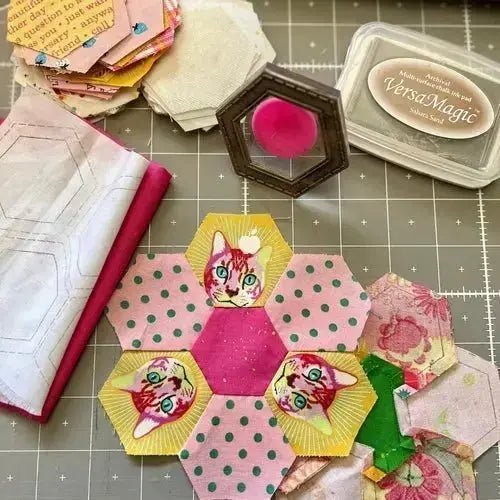
All About Hexagon Stamps and Hand Piecing Hexagons (paper free EPP!)
Wowsers! It seems like so many of you are as fascinated with hexagon stamps as I am. Recently, I shared my love for hand piecing hexagons (sewing t...
-
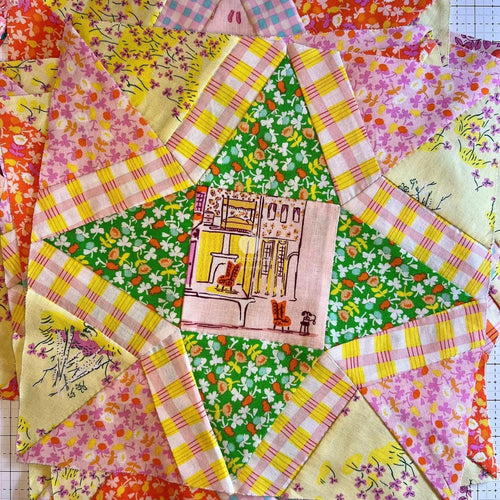
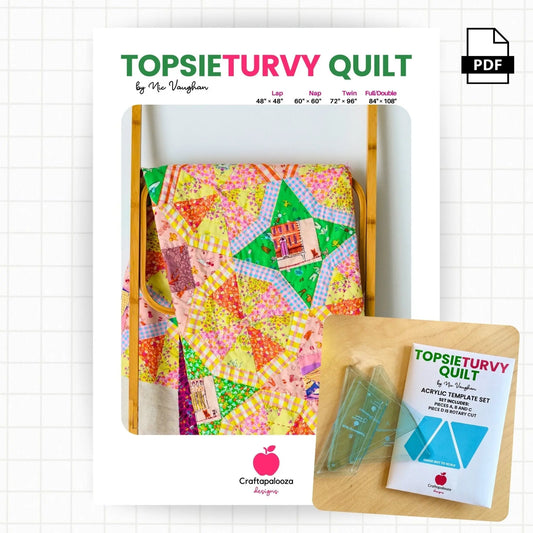
Introducing the Topsieturvy Quilt Pattern
Your new favourite patchwork adventure is here!! Hello, quilting friends! 🌟 I'm thrilled to share that the Topsieturvy Quilt Pattern is officially ...
-
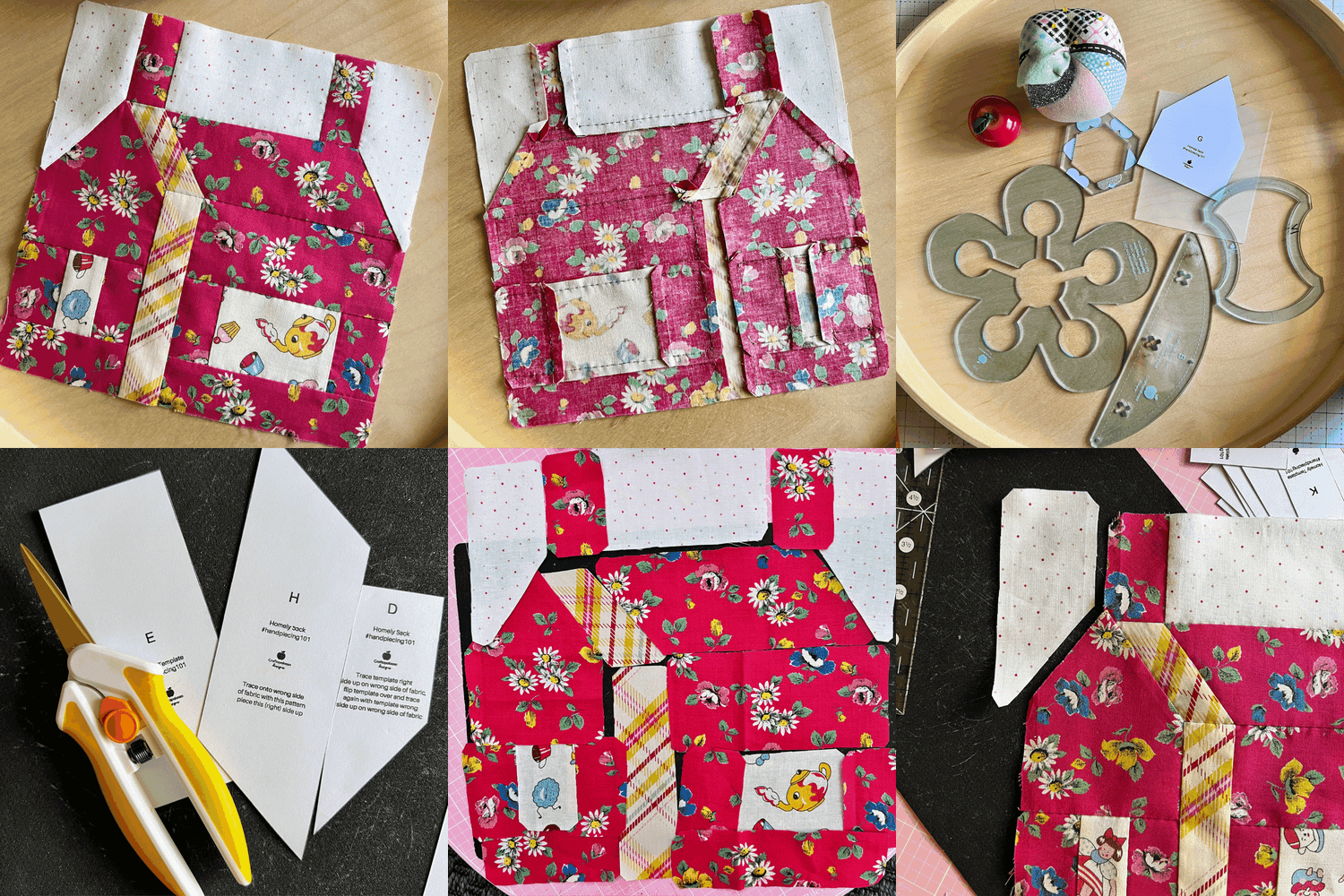
Discover the joy of creating beautiful patchwork quilts by hand
Are you a passionate quilter who longs to create stunning patchwork quilts by hand? Do you dream of mastering the art of handpiecing? Look no furth...