 Skip to content


How to Sew a Folded Hexagon: Traditional and Glue-Assisted Methods
Sewn or Glued Folded Hexagons?
In this tutorial, I’m sharing my glued variation on a folded hexagon, an alternative to the more traditional sewn method. If you were to make a coverlet using folded hexagons, use the sewn method.
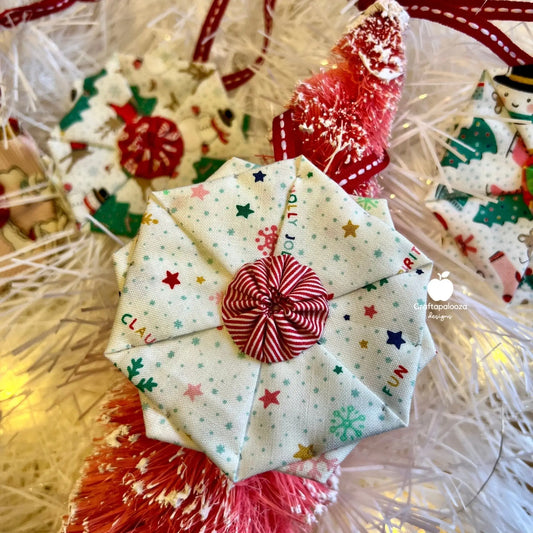
Folded hexagons are a fun, quick way to add texture to patchwork. They are versatile and provide extra handmade charm. If you enjoy dimensional details in your sewing, this technique is great to have on hand.
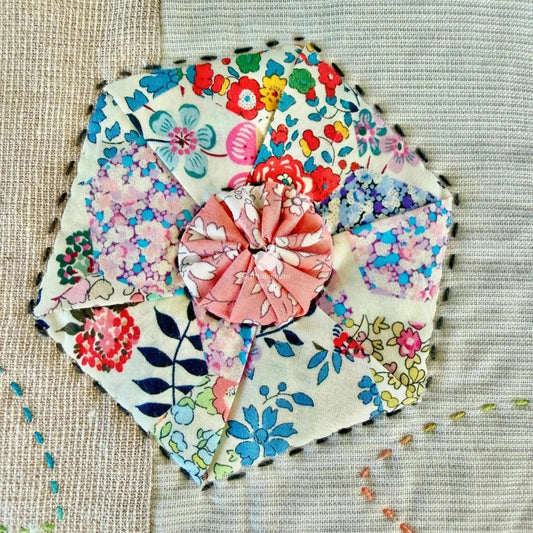
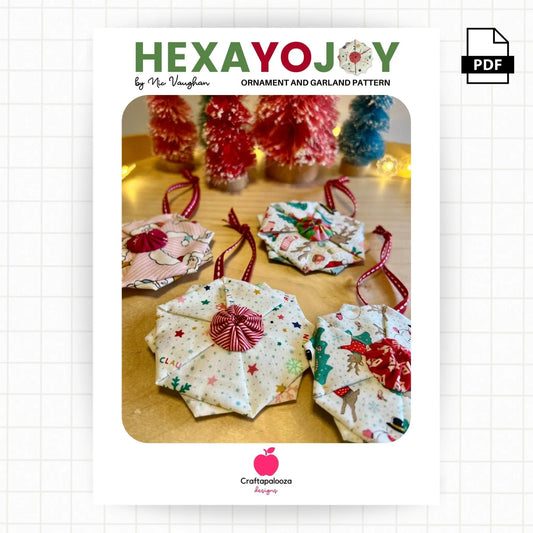
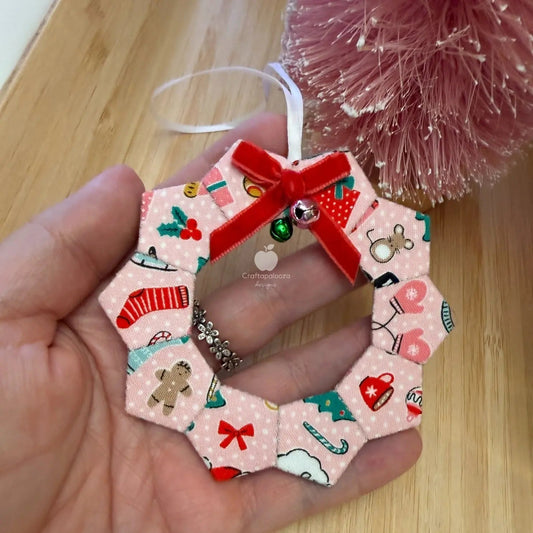
Now that you know what folded hexagons are, you might be wondering how to incorporate them into your own projects. They’re perfect for ornaments, garlands, pouches, pillows (cushions), and other patchwork items that could use a little something special. They also work beautifully as decorative motifs on larger pieces, or stitched onto a background and finished with a button or yo-yo in the centre.

A note on traditional folded hexagons
Folded hexagons can be made in more than one way. Traditionally, many makers secure the folds with needle and thread, catching a couple of threads in the centre and stitching each fold into place as they go. Some tutorials then attach the folded hexagon to a background and finish the middle with a decorative button or a small yo-yo. In this tutorial, I’m showing an alternate variation (below) using a tiny dab of glue to hold the final fold before the centre is covered. It gives you the same lovely folded shape, but with less stitching during construction and a neat finish once the centre embellishment is added. WATCH. You can also watch this video on how to do it with a needle and thread. I normally use a thinner thread, but I’ve used a thicker one for visibility. WATCH.
Why I like the glue-assisted method
My version is a little less traditional, but it is quick and approachable. Instead of stitching every fold into place as you go, the glue holds the final fold until the centre is covered. This is especially handy when making a batch of folded hexagons for decorative patchwork projects, when you don’t want to add extra stitching at that stage.
You can also use a pin instead, but I find a tiny dab of glue works beautifully for this method and keeps things nice and neat while you finish the centre. If you were making a coverlet, use the stitched method, not the glued method. You could always do the glue method and then add tacking stitches in the centre, but test this!
Which side should face up?
There is more than one way to use a folded hexagon, and that is part of the fun. I love using the folded side as the decorative side because it adds texture, dimension, and that lovely hand-sewn look to a project. If you prefer a flatter finish, you can experiment with the opposite flat side and see which suits your project best.
What size circle should I cut?
The finished folded hexagon will be smaller than the fabric circle you start with, so it is always worth making a test one first. The finished size is about half the starting circle, for example, a 4-inch circle making a 2-inch finished hexagon.
Here’s a handy guide:
3in circle = 1½in hexagon
4in circle = 2in hexagon
5in circle = 2½in hexagon
Metric guide:
7.5cm circle = 3.75cm hexagon
10cm circle = 5cm hexagon
12.5cm circle = 6.25cm hexgon
These dimensions are a guide, so make one sample first with your chosen fabric before cutting a whole batch, as fabric thickness, pressing, and folding accuracy all affect the final result.

Best fabrics for folded hexagons
Folded hexagons work best in fabrics that hold a crease nicely without becoming too bulky in the centre. Quilting (patchwork) cotton is a lovely place to start because it folds crisply and is easy to handle. Liberty Tana Lawn (or any lawn) also makes gorgeous folded hexagons.
Troubleshooting folded hexagons
If your folded hexagon looks uneven, check that your first folds are accurate. The centre creases affect the final shape.
If the centre feels bulky, try a lighter fabric or use less glue.
If the folds will not stay crisp, finger-press firmly as you go and give the shape a good press at the end.
If you are planning to make lots for one project, make one test hexagon first so you can check the finished size and the amount of bulk in the centre before cutting a whole batch. The sizing guides above are helpful, but they are approximate.

FAQ
Do folded hexagons have to be stitched by hand?
No. Traditional methods often use needle and thread to secure the folds, but a glue-assisted method can be a quicker alternative for decorative projects, if you were making them for a coverlet, sew them.
What can I use in the centre of a folded hexagon?
A small yo-yo or a button are both lovely options for covering the centre and finishing the folded hexagon.
Can folded hexagons be used in quilts?
Yes. They can be used as textured embellishments on larger quilted pieces, as decorative patchwork motifs, or in projects like pouches, ornaments, cushions, and coverlets.
How big should my fabric circle be for a folded hexagon?
That depends on the finished size you want. A good rule of thumb is that the finished folded hexagon will be about half the size of the starting circle, but it is always best to make a test one first.
Make fast and easy folded hexagons - glue baste method
Folded hexagons are an alternative to yo-yo's however you will need something to secure the centre, like a yo-yo or button. They're fast and fun to make! They can be used to sew a coverlet, no quilting required!
Trace a circle onto the wrong side of your chosen fabric and cut it out.
With the fabric wrong side up A, fold the circle in half and make a gentle crease on the fold B, don’t unfold the circle, holding the creased edge fold that across to make a quarter circle and press the folded creases C, now open up and place fabric wrong side up D.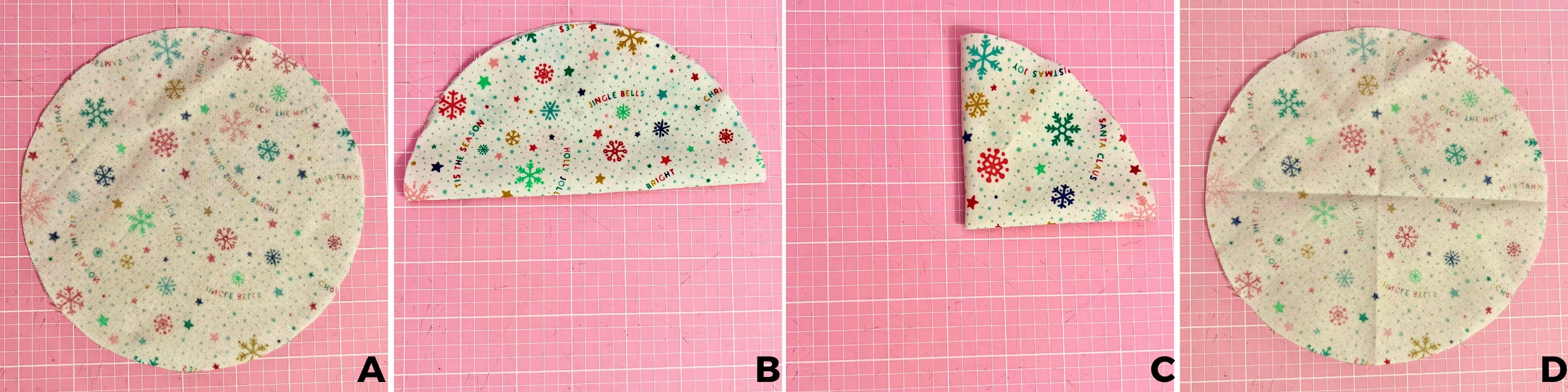
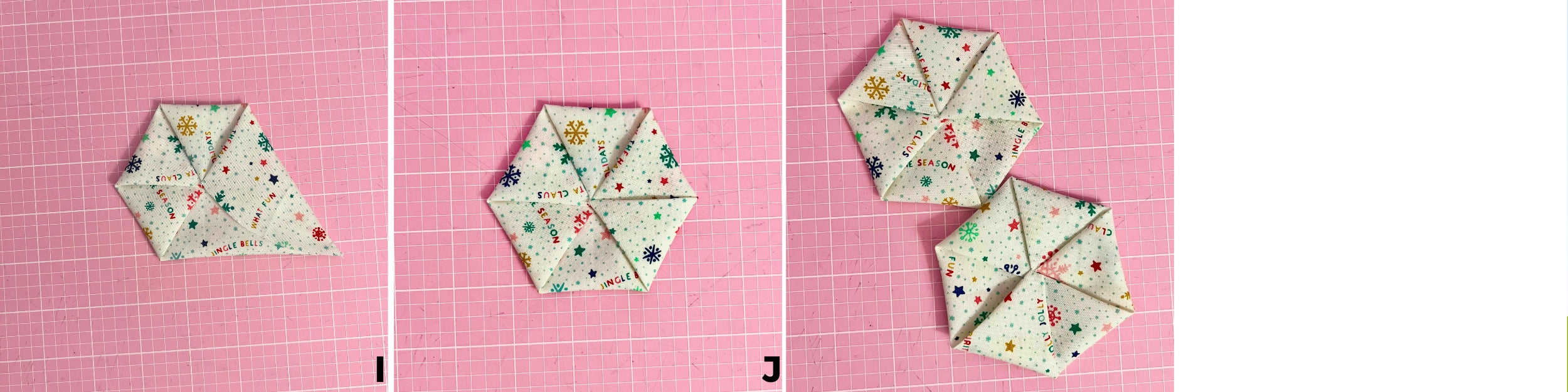
Take the bottom of the circle up and line up the vertical crease and finger press along the fold to crease the fabric E. Then take up the folded outer edge of the circle of the crease just made and fold that in to the centre crease F. Continue to do the same process until you have folded in all the edges, on the last fold, dab a little glue in the centre and then fold the last edge. To hold the hexagon in place, or use a pin, but I find a little glue is better, G through to J. Congratulations you’ve folded your first hexagon!


Read more...
-
Meet Space Cadet and the 2027 Patchwork Calendar
Space Cadet Quilt is finished, and she is scrappy joy in the best possible way. 🥰 This quilt began with vintage patchwork block inspo caught my eye...
-
The Practical Magic of Strawberry Pincushions: A Must-Have for Sewists
Sew your own collection of Strawb Pinnie's to keep your pins and needles sharp and smooth Like a lot of you, I love the charm and functionality of ...
-
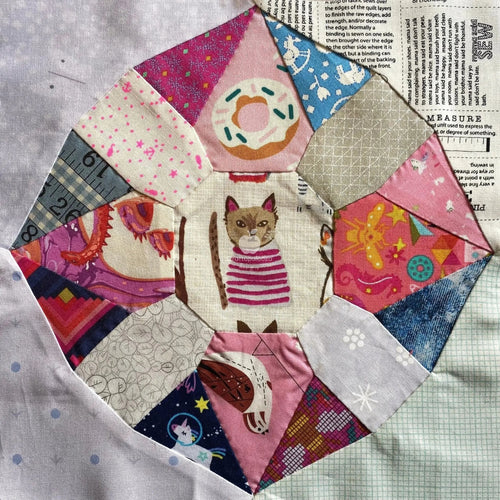
Have some fun and piece the Wheely Fun quilt block
Wheely Fun is a free pdf download. You'll receive full illustrated instructions on how to piece the block and it's an excellent introduction to han...














1 comment
Hi Thankyou
Im 70 years young and no longer able to get about so i looking for a hobby to replace walking and my passion photography. I bought your hexigan basket kit. Im at the moment reading as much as i can before starting to sew. Im also saving up to buy a printer as will need one to print the pattern. Thankyou once more for my freebi in an every increasing expensive world it make a huge difference.
———
Craftapalooza Designs replied:
Thanks so much Valerie! You’re welcome. Would it be an option to send the pdf online to get it printed at a print shop? Save you having to save and wait? Might cost a little less? Print it in black and white. Nic